Why the French Touch Is Reclaiming the Dancefloor
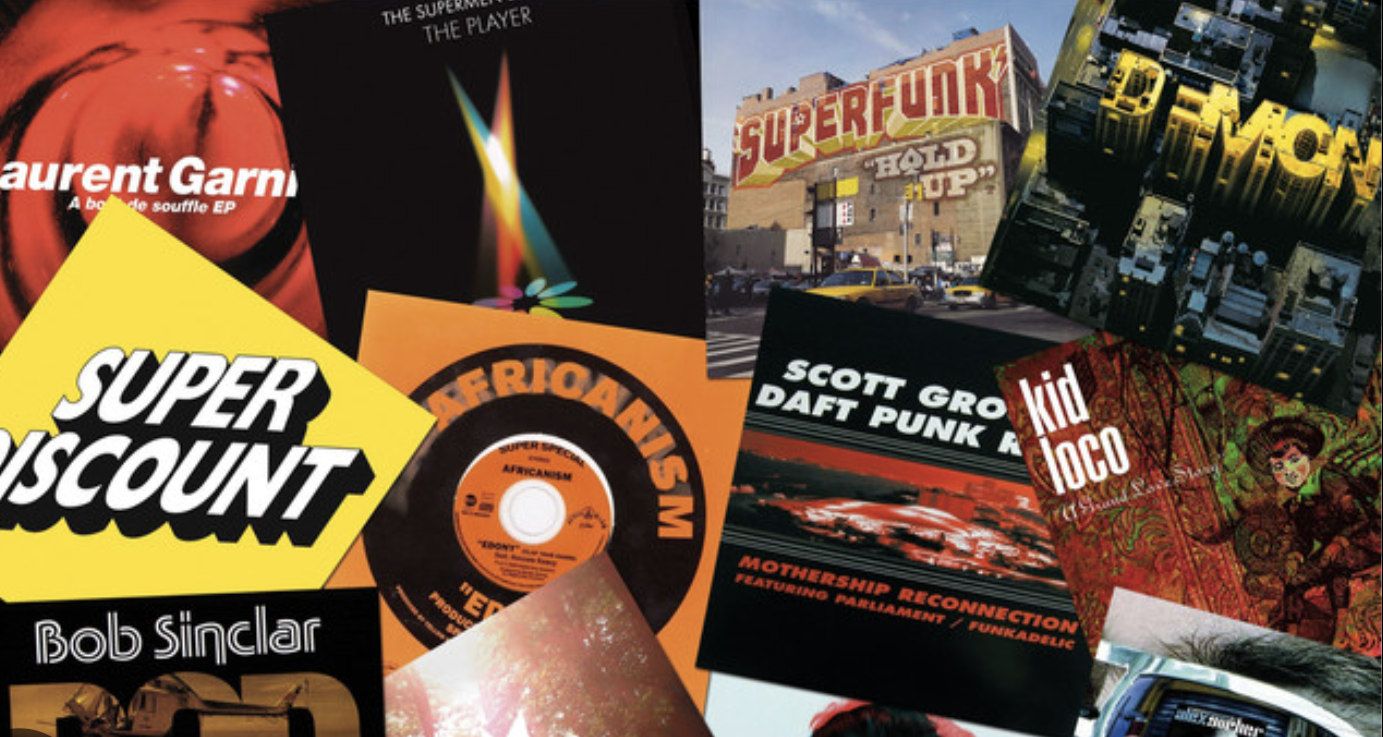
Taking forgotten 1970s disco baselines, running them through Akai samplers, and crushing them with low-pass filters until they sound like a heartbeat pumping underwater was the soundtrack of many people’s first cars as well as the smoky, subterranean hedonism of late-90s Paris before going global. Lately, the genre built entirely on the art of looking backwards is having a comeback of sorts.
But first, lets start were it all began…
To understand why the filter-house renaissance feels so vital right now, you have to look at the lineage. In the mid-1990s, the UK had jungle and rave, Detroit had minimalist techno, and Chicago had the driving warehouse tracks that started it all. Paris had an identity crisis.But out of clubs like Rex Club and Le Palace emerged a loose collective of producers who weaponised funk.
The blueprints were drawn by Daft Punk, whose 1997 debut Homework was a gritty, distorted masterclass in repetition. But Daft Punk weren't operating in a vacuum. The true architects of the sound were a brilliant, interconnected web of bedroom producers. Étienne de Crécy provided the conceptual backbone with his landmark Super Discount series, establishing the compilation format as the genre's collective manifesto.
Simultaneously, Bob Sinclar founded Yellow Productions, channelling jazz, lounge, and deep house into tracks like "Gym Tonic" (co-produced by Thomas Bangalter), proving the French underground could be undeniably sleek and globally accessible.
Alongside them stood pioneers like Cassius , and the production duo of Alan Braxe & DJ Falcon, the masterminds behind the Stardust anomaly, "Music Sounds Better with You".
The late 2000s renaissance
By the late 2000s, the genre mutated into the jagged, leather-jacket-clad "Bloghouse" era led by Pedro Winter’s Ed Banger Records. Justice traded disco loops for heavy-metal distortion and Christian iconography, proving the French Touch could headline rock festivals without losing its club pedigree.
Why the Filter Is Coming Back
The modern resurgence isn't just lazy nostalgia; it's a structural reaction to the sterile landscape of algorithmic dance music. For the past several years, global clubbing has been dominated by two extremes: the bleak, industrialised thud of business-techno and the hyper-polished, melancholic drift of melodic deep house.
The dance floor got serious. The French Touch is, by design, anti-serious.
It reintroduces humanity through the machine. The classic French technique involves taking a micro-sample of a soulful vocal or a physical bass guitar, compressing it into oblivion, and using a phaser to make the frequencies breathe. It creates a physical, emotional tension on the dance floor that a synthesised preset simply cannot replicate. In an era starved of organic warmth, the looping euphoria of French house feels like oxygen.
The Evidence of the Return
If you need proof that the French Touch has successfully staged a coup on contemporary culture, look no further than the cultural calendar over the last several months:
The Legislative Coronation: Late last year, electronic music was officially added to France’s Intangible Cultural Heritage list. Nightclubs are now legally recognised as "places of artistic expression," elevating producers like Daft Punk and Cassius to the same cultural tier as Parisian haute couture.
The Ibiza Time Machine: The revival isn't just happening on paper; it's dominating the world's most influential dancefloors. Go into any mega-club in Ibiza right now, whether it's the open-air theatre of Ushuaïa or the glittering disco-infused booths of Glitterbox, and you'll hear the distinct, filter-swept chords of Bob Sinclar's "I Feel For You" echoing through the sound systems. Originally released in 2000, the track's heavy, intoxicating Jane Fonda vocal loop and rubbery bassline are being dropped by A-list DJs to crowds who weren't even born when it first dropped, proving that original French Touch blueprints are completely bulletproof.
The Festival Monopoly: Justice spent the past year touring their critically acclaimed album Hyperdrama, proving that their brand of maximalist, stadium-sized funk is still the most cinematic live show in electronic music.
The Streaming Validation (Disney+ Joins the Club): In a massive indicator of the genre's historic prestige, Disney+ recently announced an official greenlight for a three-part documentary series titled Une Histoire de la French Touch. Directed by Thibaut de Longeville, the visionary who masterfully captured French club history in DJ Mehdi: Made in France, the docuseries utilises unseen archival footage and brand-new interviews with Daft Punk, Étienne de Crécy, Cassius, and Alan Braxe. When a multi-billion-dollar streaming giant pivots to document late-90s underground club culture, it's no longer just a trend; it is canonised cultural history.
The Next Gen Vanguard: On the ground, the sound is being propelled forward by old guards and new disciples alike. Alan Braxe and DJ Falcon’s collaborative project Braxe + Falcon is releasing pristine, sample-heavy house that sounds entirely timeless, while acts like L'Impératrice and the Picard Brothers are translating the classic filter-house ethos for a new generation of listeners.
The French Touch succeeded because it understood a fundamental truth about dance music, the hook doesn't need to change if the groove is unshakeable. As the phasers sweep back into the mainstream, the global club scene is remembering how to dance with a smile on its face again